
Support Thangka Artists
Yushu Earthquake put thousands of children out of school, and most of them were not fortunate enough to receive a free education. Some of them went for careers as Thangka artists instead.

Inheriting An Ancient Art Form
The Thangka art is a traditional Tibetan art form. It usually depicts deities in Tibetan Buddhism. To create a perfect Thangka, artists must have more than 10 years of systematic training. Viewers can see the artists' devotion to their religion reflected in these paintings.
The artist Tsang Mai has been offering help to children who were put out of school by the earthquake since 2010. He started training these children to become the next generation Thangka artists, and learning in his studio is totally free. Yushu Reborn is fortunate to partner with Mr. Tsang Mai's studio in facilitating the development of this ancient art form.
Artists

Tsang Mai
I am the founder of the Yushu Gahma Thangka Studio. I am a third-generation Thangka Artist, and I have been working with Thangkas for more than 30 years
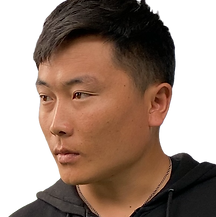
Sannam
I have been learning Thangka for more than 10 years, and creating art feels more like prayer rituals for me.

Chiu'an
I am an independent artist at the Thangka studio. Thangka provided me a way to interact with this world despite my hearing disability.

The Process of Creating a Thangka
An Ancient Practice
Most pigments used to make the Thangkas are minerals and have to be ground up manually. After mixing the pigments with animal-based glue, the artists apply them over a pre-processed cotton canvas. A single Thangka can take up to months, or even years to finish, depending on the size and the level of detail.

The Steps

Grinding up the Minerals
The minerals used as pigments must be ground up manually. After this, they are stored for future use
First Draft
The first draft of Thangka determines its quality. The artist first determines the exact ratio of the painting, and then works on the rough shape of the deities. The painting of deity figures must follow strict guidelines set by buddhist texts. The artist can only master it after years of training.


Collaboration
A regular sized Thangka often takes months of hard work, thus making collaboration between artists extremely important. Collaboration is a combination of each artist's forte.
Finalizing
The facial expressions of the deities, particularly their eyes, must be rendered independently by the senior artist using specially crafted brushes designed for this delicate work. These final details complete the Thangka. During the Yushu Reborn team's studio visit, we witnessed this concluding process firsthand.


Yushu Reborn
Photo & Video Credit:
All materials used are produced by our photographer team. Special thanks to Bao Yong and Yichen Huang.
Copyright @ 2021 Haotian Yang All Rights Reserved.
We're working with Princeton's
Pace Center for Civic Engagement
201 Frist Campus Center
Princeton, NJ 08544
We’re a non-profit dedicated to supporting Yushu Earthquake victims to obtain medical school education.